


Views: 0 Author: Site Editor Publish Time: 2026-11-26 Origin: Site


A centralized feeding system material changeover involves stopping the previous material supply, clearing residual pellets from conveying lines, cleaning relevant receivers and dosing equipment, and verifying the new material routing before restarting production. Following a controlled procedure helps a centralized feeding system reduce cross-contamination, material waste, and unnecessary downtime. Transitioning between different resins, powders, or additives creates severe mechanical bottlenecks. Poorly executed changeovers leave residual pellets hidden in the lines, hoppers, and receivers. This leads to equipment damage, wasted virgin resin, and scrapped parts.
Handling a centralized feeding system material changeover effectively takes optimized equipment geometry, strict evacuation protocols, and smart automation. We need to minimize transition times while protecting the integrity of the next production run. You must integrate drying and dosing purges while completely killing contamination risks. This guide breaks down exactly how to evaluate your setup, clear your conveying lines, and get your injection molding machines or extruders back to producing good parts faster.
Automated Line Evacuation is Critical: Implementing reverse-vacuum or dedicated purge cycles at the end of a production run minimizes residual material and reduces manual cleaning time.
Manifold Design Dictates Speed: The choice between manual quick-disconnect manifolds and automated, RFID-verified distribution stations directly impacts changeover duration and operator error rates.
Piping Geometry Prevents Degradation: Smooth-bore piping, flexible air refilling systems, and optimized conveying speeds prevent "angel hair," stringing, and dusting, which complicate system cleanouts.
Verification Prevents Scrap: Integrating barcode or RFID material verification at the source prevents costly cross-contamination during complex multi-line changeovers.
Holistic System Clearing is Required: A true changeover extends beyond the piping to include bulk loading sources, central dryers, and downstream dosing units.
Table of Contents
Defining the success criteria for a changeover establishes the baseline for facility efficiency. The true measurement of a changeover is the total elapsed time from the last good part produced with the old material to the first good part produced with the new material. This metric encompasses line purging, equipment cleaning, material verification, and the initial conveying cycle of the new resin.
Hidden costs accumulate rapidly when injection molding machines or extruders sit idle. While operators wait for plant-wide material lines to clear, the processing equipment continues to consume energy to maintain barrel temperatures. Prolonged residence times for residual polymers in the heated barrel lead to severe material degradation. Heat-sensitive resins like PVC or POM will burn, requiring operators to pull the screw and manually scrub the barrel before production can resume. Minimizing the duration of the material handling transition directly increases overall equipment effectiveness (OEE) and maximizes machine utilization rates across the floor.
Mixing incompatible polymers or powders carries heavy financial consequences. Introducing incompatible resin pellets into an ABS production run can cause visible defects, inconsistent material properties, and rejected molded parts. Cross-contamination results in visual defects like black specks, splay, or color streaking. It also causes mechanical failures such as delamination, weak weld lines, or reduced impact resistance.
The cascading effects of contamination extend far beyond the immediate production run. If contaminated parts are ground and reintroduced into the system as regrind, the compromised material spreads throughout the entire facility. Purging a contaminated centralized network requires shutting down multiple lines, dismantling vacuum receivers, dropping feed throats, and manually scrubbing conveying pipes. Preventing these events through strict changeover protocols protects product quality and prevents catastrophic scrap events that destroy production margins.
The central manifold serves as the routing hub. It directs materials from bulk storage silos or Gaylord boxes to specific processing machines. The physical design of this distribution station dictates the speed and accuracy of plant-wide re-routing.
Traditional manual stations utilize cam-lock fittings and flexible hoses. Operators physically disconnect a hose from one material port and connect it to another. While mechanically simple, this method introduces a massive risk of human error. Connecting a destination line to the wrong source port instantly contaminates the downstream equipment. Automated diverter valves eliminate manual hose handling entirely. Controlled via a central PLC, these pneumatic valves route materials internally. They allow for rapid, automated material routing across the facility without requiring operators to move hoses manually.
Manifold Type |
Mechanism |
Changeover Speed |
Contamination Risk |
|---|---|---|---|
Manual Cam-Lock |
Physical hose swapping |
Slow (10-20 mins per line) |
High (Operator dependent) |
RFID-Monitored Manual |
Hose swapping with sensor validation |
Moderate (10-15 mins per line) |
Low (System locks out errors) |
Pneumatic Diverter |
Automated internal valve switching |
Instantaneous |
Zero (Hardcoded routing) |
A complete changeover process must integrate central drying hoppers and gravimetric or volumetric blenders. Residual pellets often hide in the dead zones of drying hoppers or the mixing chambers of dosing units. If you do not thoroughly evacuate these components, the new material will mix with the old.
Modern dosing units feature specific cleanout enhancements to accelerate transitions. Slide gates isolate the material supply, allowing operators to drain the hopper without spilling resin across the floor. Removable mixing chambers and quick-release augers permit thorough benchtop cleaning. Easy-drain drying hoppers equipped with large cleanout doors provide unobstructed access to the internal cone. This ensures no pellets remain trapped in the diffuser cone before introducing the next batch of resin.
Vacuum receivers sit above the processing machines and represent the final material handling touchpoint before the resin enters the feed throat. Receiver design heavily influences manual cleaning times. If an operator needs a wrench to open a receiver, your changeover is already taking too long.
Units engineered for rapid changeovers feature tool-less access. Hinged lids secured by quick-release clamps allow operators to open the receiver in seconds. Polished stainless-steel interiors prevent dust and fines from adhering to the sidewalls. Easily removable filter screens and integrated compressed-air blowback systems manage dust accumulation. This ensures the receiver maintains optimal vacuum pressure and wipes clean easily between material runs.
The physical layout and surface treatment of the conveying pipes determine how easily the system clears during a purge cycle. Material degradation inside the piping creates severe cleanout challenges that automated purging cannot fix alone.
Long-radius bends reduce the impact angle as pellets navigate corners, minimizing friction. Specialized elbows, including glass-lined and shot-peened designs, can reduce pellet friction and localized heating, helping limit the formation of "angel hair" during high-speed plastic conveying. Flexible air refilling adjusting systems and variable conveying speeds keep materials suspended in the airstream. By preventing stringing and dusting during the conveying process, optimized piping geometry ensures the lines wipe clean during the final evacuation cycle.
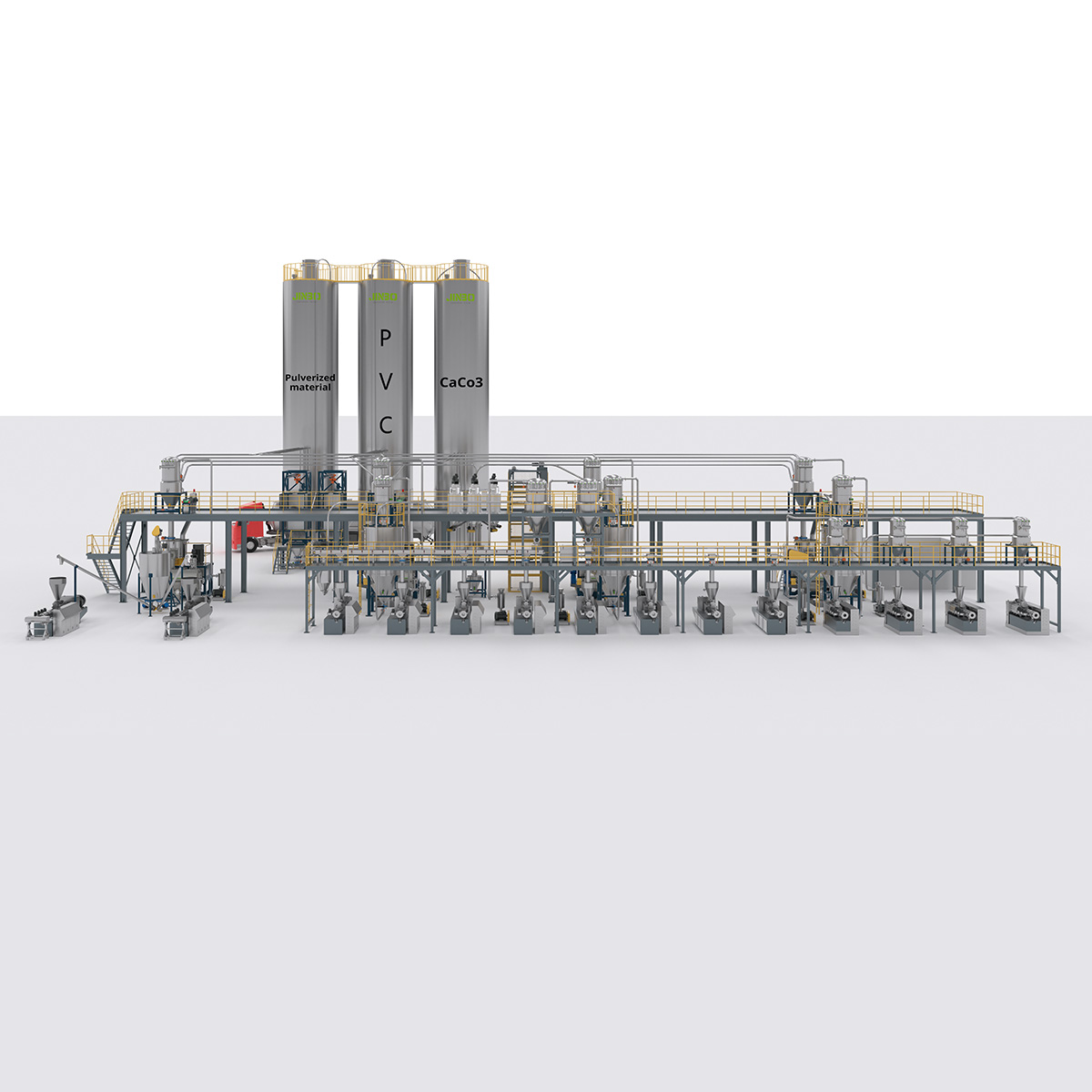
Managing the changeover begins at the bulk loading stage. Whether transitioning between outdoor silos, swapping Gaylord boxes, or cleaning out bulk bag unloaders, you must secure the source before altering downstream connections.
Proper suction wand management is the first step. Operators should lift the suction wand above the material level in the Gaylord while the vacuum pump is still running. This action allows ambient air to enter the wand, pushing the final slug of material up the vertical tube and into the conveying line. Source-level purging helps clear residual pellets from the suction wand and initial flexible hose before the material connection is disconnected. Failing to do this dumps pellets onto the floor the moment the hose is uncoupled.
Clearing the conveying lines before disconnecting the source prevents material spills and internal cross-contamination. A controlled line-clearing sequence removes residual material from the conveying path and reduces the risk of carrying pellets or powders into the next production run.
Clear-line valves play a critical role in this phase. Installed near the material source, these valves close off the material flow and open an ambient air port. The vacuum pump continues to pull air through the system, sweeping all residual pellets or powders from the horizontal and vertical pipe runs into the destination receiver. Proportioning valves can also be cycled to ensure both virgin and regrind lines are fully evacuated before the system powers down for the physical changeover.
Once the lines are purged, operators must physically clean the localized equipment. Establishing baseline protocols for wiping down hoppers, receivers, and dosing units prevents residual dust from contaminating the next run.
Operators should use industrial HEPA vacuums and lint-free microfiber cloths to clean internal surfaces. You must avoid compressed air. Blowing compressed air into a receiver simply scatters dust into the plant atmosphere, where it settles on molds, tie bars, and adjacent clean equipment. Powder changeovers present specific challenges compared to pelletized plastic resins. Powders like talc or titanium dioxide are highly cohesive and coat equipment surfaces. These applications often require industrial vacuums with suitable fine-powder filtration and thorough cleaning of material-contact surfaces; wet washdown should be used only on equipment designed for washing and complete drying.
Connecting the new material source to the correct destination line requires strict procedural discipline. Routing errors at this stage negate all previous cleaning efforts and guarantee a scrapped run.
Operators must physically trace the connection or utilize digital verification tools to confirm the new material matches the production schedule. Double-checking connections at the manifold, the dryer, and the machine receiver is mandatory before initiating the vacuum pump. Implementing a secondary sign-off procedure, where a supervisor or quality technician verifies the routing, adds a layer of security against accidental cross-contamination.
Manual stations rely on operators physically moving hoses between designated ports on a central distribution board. They are the standard in older facilities.
Lower initial capital expenditure and mechanical simplicity.
Troubleshooting requires minimal technical expertise.
Highly dependent on operator accuracy.
Transition times are slower due to the physical labor involved.
The risk of connecting the wrong material line remains high without secondary verification.
Automated systems utilize pneumatic diverter valves and sensor-based verification to route materials without manual hose handling. They represent the modern standard for high-throughput plants.
Near-instantaneous material re-routing.
Reduced material routing errors through RFID verification and PLC interlocks.
Centralized control tracking provides a digital audit trail of all material movements.
Requires complex pneumatic and software integration.
Diverter valves may experience accelerated wear in highly abrasive applications, such as glass-filled nylons.
Central control software acts as the brain of the material handling network, coordinating the actions of pumps, valves, and receivers.
Provides a single interface to schedule, monitor, and execute simultaneous changeovers across the entire facility.
Integrates drying, blending, and conveying data into one dashboard.
Requires significant upfront programming and network infrastructure.
Demands ongoing software maintenance and operator training.
System Type |
Changeover Speed |
Error Prevention |
Ideal Application |
|---|---|---|---|
Manual Quick-Disconnect |
Slow (15-45 mins) |
Low (Relies on operator) |
Low-mix, high-volume production |
Automated Diverter Valves |
Fast (Under 5 mins) |
High (Software lockouts) |
High-mix, low-volume production |
RFID-Verified Manual |
Medium (10-20 mins) |
High (Scan-to-convey) |
Mid-sized facilities needing error-proofing |

Friction in the conveying lines melts the outer layer of plastic pellets, creating strings that trap subsequent materials and ruin changeover integrity. These strings wrap around diverter valves and clog receiver screens, requiring extensive manual intervention to remove. If you ignore angel hair, it will eventually choke the conveying line completely.
To mitigate this risk, implement variable frequency drives (VFDs) on vacuum pumps. VFDs allow operators to optimize conveying speed based on specific material density and fragility. Utilizing flexible air refilling systems alongside specialized piping treatments, such as shot-peening, creates micro-turbulence inside the pipe. This turbulence keeps pellets suspended in the center of the airstream, preventing them from dragging against the pipe walls and generating friction heat.
Operators bypassing purge cycles or misconnecting lines at the manifold lead to massive scrap events. When production schedules are tight, the temptation to skip thorough cleaning steps increases, directly threatening product quality.
Institute mandatory barcode scanning for material lot verification. Operators must scan the Gaylord, the manifold port, and the destination receiver. Implement hard-coded PLC lockouts that prevent the vacuum pump from engaging if a mismatch is detected. Continuous training programs focusing on the financial impact of cross-contamination help reinforce the importance of strict procedural adherence on the floor.
Insufficient conveying airflow or available vacuum can leave residual material in long horizontal or vertical pipe runs during the purge cycle. When gas velocity falls below the minimum required for stable transport, pellets may accumulate in sections of the pipeline and contaminate the next material batch.
Engineer the system with strategically placed line-clearing valves. Ensure vacuum pumps are sized for the maximum purge distance, not just standard conveying requirements. The pump must generate sufficient cubic feet per minute (CFM) to sweep the entire line empty, even when pulling ambient air from the furthest point in the facility. Regularly inspect horizontal pipe runs for pellet buildup to confirm your purge times are long enough.
Audit your current changeover times by tracking the exact minutes between the last good part of the old run and the first good part of the new run.
Install clear-line valves at all bulk material sources to automate the evacuation of horizontal and vertical pipe runs.
Upgrade manual distribution manifolds with RFID-tagged connection points to physically lock out incorrect material routing.
Equip every processing machine with dedicated industrial HEPA vacuums and microfiber cloths to eliminate the use of compressed air during cleanouts.
Program variable frequency drives on your vacuum pumps to adjust conveying speeds based on resin fragility, preventing angel hair buildup.
A: A changeover takes anywhere from 5 minutes for fully automated systems to over 45 minutes for manual cleanouts. The exact duration depends heavily on your conveying distances, the physical layout of your piping, and whether your operators use manual quick-disconnects or automated diverter valves.
A: A line-clearing valve stops material intake and admits air into the conveying line while the vacuum pump continues operating. The airflow carries residual pellets or powder toward the receiver, reducing material hold-up before the next changeover.
A: Yes, existing systems can be retrofitted with automated diverter manifolds, RFID-tagged connection points, and updated PLC controls. However, existing piping geometry may still limit overall cleanout efficiency if the lines are prone to angel hair.
A: Prevention relies on complete line evacuation, thorough cleaning of the vacuum receiver, central dryers, and machine hoppers. You must pair this physical cleaning with strict material verification protocols like barcode scanning before initiating the new conveying cycle.
A: Adjusting the conveying speed prevents material degradation, such as dusting or stringing. If a system is coated in dust or angel hair from the previous run, it requires manual scrubbing, which drastically increases changeover time and labor costs.


