


Views: 0 Author: Site Editor Publish Time: 2025-12-01 Origin: Site


Efficient material handling is crucial for large-scale industries like plastic manufacturing, food processing, and aquaculture. Choosing the right system can make or break production efficiency. In this article, we'll compare two popular solutions: Centralized Feeding Systems (CFS) and Automatic Feeding Systems (AFS). You'll learn how each system impacts production scale, precision, and flexibility, helping you determine which one suits your needs.
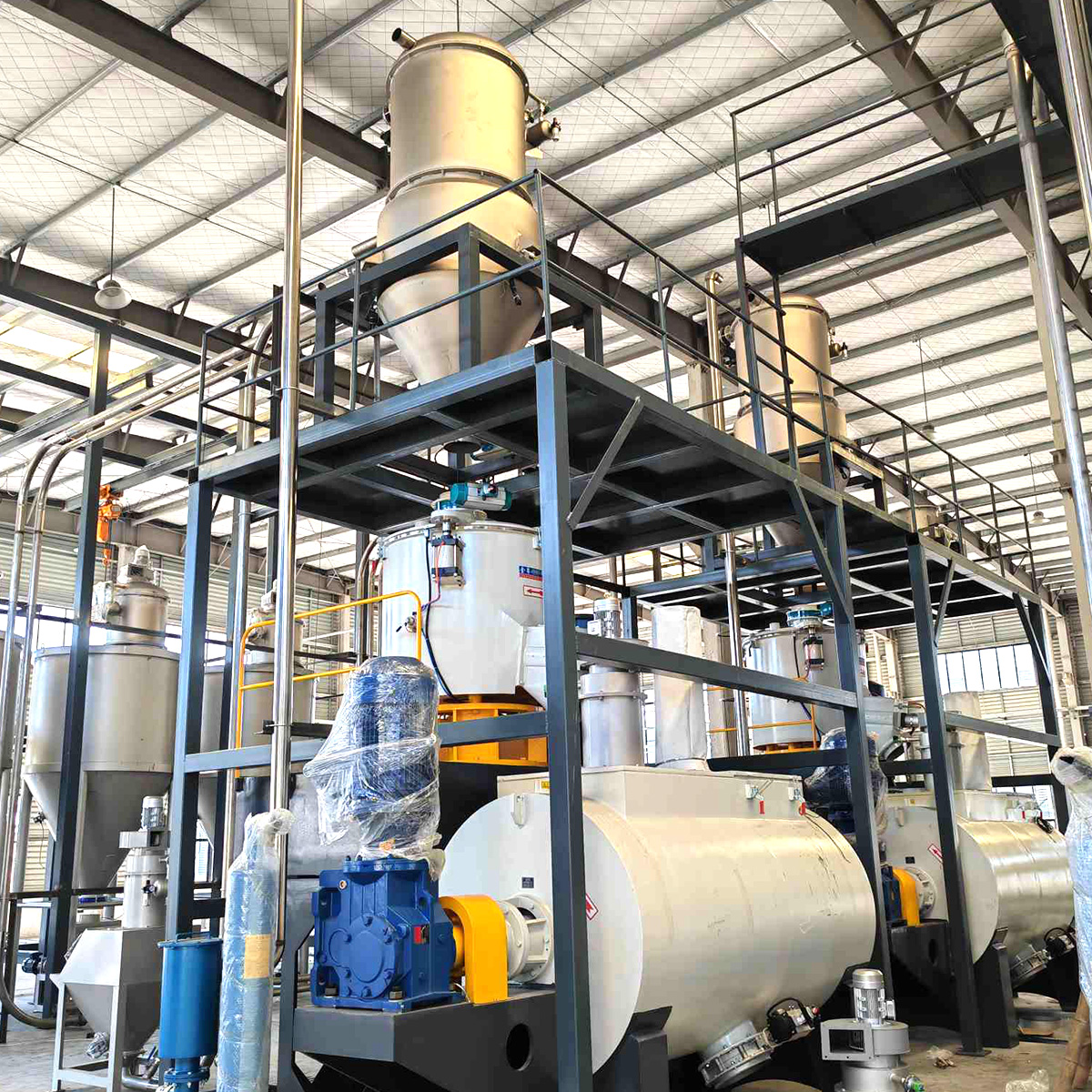
A Centralized Feeding System (CFS) is designed to handle large-scale production environments where consistent and efficient material delivery is essential. It works by centralizing raw material storage, preprocessing, and distribution to various machines or production units across the plant. This system is often used in industries like plastic manufacturing, food processing, and aquaculture, where multiple production lines need a steady supply of materials without manual handling.
Key components of a CFS include:
● Central Silos: A central storage hub holds the raw materials, reducing the need for individual hoppers or bins at each machine. The materials are preprocessed for optimal use, such as drying or dehumidifying.
● Conveying Systems: Materials are transported via vacuum or positive-pressure systems, ensuring efficient and long-distance delivery to the production units. These systems are typically capable of transporting materials over distances of up to 200 meters.
● Centralized Control: The CFS operates through a centralized control system, often a Programmable Logic Controller (PLC), which manages the entire system, including material levels, drying, and batch scheduling. This ensures uniformity and reduces human error across production units.
An Automatic Feeding System (AFS) is designed for environments where precision, flexibility, and smaller-scale production are essential. It is typically used in situations where production requires less automation or where materials need to be delivered with more precision, such as in medical plastic manufacturing, custom injection molding, and aquaculture.
Key features of an AFS include:
● Localized Hoppers: Materials are stored in smaller, decentralized hoppers or bins located near individual machines. This allows for quicker access and precise material control for each machine.
● Pneumatic Pulse Conveying: Unlike CFS, which uses continuous flow, AFS relies on pulse conveying, using bursts of air or vacuum to move materials in smaller batches. This method is more suited for precise material delivery in shorter distances (typically under 50 meters).
● Machine-Level Control: Each machine or zone is controlled independently, with timers, sensors, or small PLCs managing the material flow. This setup provides greater flexibility and precision for smaller production runs, where material changeovers or specific batch control are required.
Tip: Both systems offer distinct advantages depending on the scale, flexibility, and precision needed in a production environment.
The Centralized Feeding System (CFS) operates through a centralized hub where raw materials are stored in silos or hoppers. These materials are then conveyed over long distances using closed-loop systems, such as vacuum or positive-pressure conveyors. This allows materials to be distributed to multiple machines across a plant, ensuring a uniform supply of materials. It is designed for large-scale operations, often spanning distances of up to 200 meters.
In contrast, the Automatic Feeding System (AFS) follows a more localized approach. Materials are stored in small hoppers near each machine, and short-distance pneumatic or pulse conveying is used to transport materials. The system relies on semi-centralized control, with some machines managed independently or in small groups. This design suits smaller-scale production environments, offering greater flexibility but less extensive coverage.
The CFS is managed by a plant-wide PLC control system that oversees all material handling functions, including drying, conveying, and distribution. A single HMI (Human-Machine Interface) monitors multiple machines at once, providing centralized oversight. This setup ensures smooth, continuous operation across large plants, where consistency is critical.
On the other hand, the AFS utilizes zone-level or independent control for each machine or group of machines. This decentralization allows for greater flexibility in handling smaller batches and frequent material changes. Each machine typically has its own set of timers, sensors, or mini-PLCs that manage material flow, making it ideal for environments where precise, localized control is more important than plant-wide monitoring.
When it comes to precision, CFS generally offers moderate precision, with accuracy typically within ±0.5–1% for material dosing. The traceability in a CFS system is also batch-level, providing information on material lots and production schedules. However, it's less granular compared to systems that demand individual machine control.
In contrast, AFS delivers high precision, with accuracy often in the range of ±0.1–0.3% due to the use of gravimetric load cells and other advanced measurement tools. This level of precision is crucial for industries where strict compliance with regulatory standards is required, such as in the production of medical plastics or pharmaceuticals. Furthermore, AFS provides machine-specific traceability, offering detailed logs for each batch, including timestamps, weight, and operator information.
CFS excels in horizontal scalability, meaning it can easily accommodate the addition of more machines or production lines. This makes it ideal for high-volume production environments where capacity growth is anticipated. While the initial investment is typically higher, the marginal cost per unit decreases as the system expands, making it cost-effective in the long run for large plants.
AFS, on the other hand, is more suited for vertical scalability, which focuses on expanding the capacity of individual machines rather than increasing the number of machines. It is ideal for smaller operations producing ≤500 kg/h. Although the initial costs may be lower, the cost of adding more machines or feeders can quickly increase, making it less cost-efficient for large-scale operations.
The CFS is designed to be energy-efficient for large-scale operations. It can significantly reduce energy usage, especially when compared to using individual dryers for each machine. Moreover, labor savings are substantial, as the system automates material delivery to multiple machines, eliminating the need for manual feeding in large plants.
In contrast, AFS is more energy-efficient for smaller batch production, using pulse conveying technology that consumes less energy for short-distance transport. It also reduces the labor force by automating the feeding process, though local checks may still be required for optimal performance. Despite this, AFS systems require more manual intervention than CFS, particularly when dealing with multiple materials or frequent changeovers.
Feature | Centralized Feeding System (CFS) | Automatic Feeding System (AFS) |
System Design | Centralized hub, long-distance closed-loop conveying | Localized, short-distance conveying, semi-centralized |
Control Logic | Plant-wide PLC control, centralized monitoring | Zone-level or machine-specific control |
Precision & Traceability | Moderate precision, batch-level traceability | High precision, machine-specific traceability |
Scalability | Horizontal scalability, ideal for large volumes | Vertical scalability, ideal for small-to-medium production |
Energy & Labor Efficiency | Energy-efficient for large-scale, labor-saving | Energy-efficient for small batches, localized checks needed |
The Centralized Feeding System (CFS) is ideal for large-scale production environments where consistency, energy efficiency, and the ability to handle large volumes of material are essential. One common application is in PVC pipe extrusion. In these facilities, CFS enables the handling of multiple extrusion lines, often over 20 machines, from a single material storage hub. This centralized approach ensures uniform drying and material distribution, which is crucial in avoiding defects like air bubbles in the final products. Similarly, in automotive injection molding, CFS is used to supply material to numerous machines, improving efficiency and reducing manual feeding, which leads to significant labor savings. It is particularly suited for industries that require continuous, high-volume material flow and consistent processing conditions.
On the other hand, the Automatic Feeding System (AFS) is more suited to operations where precision and flexibility are critical. Medical plastic injection molding is a prime example. In this industry, it’s essential to meet strict regulatory standards for material accuracy and traceability. AFS delivers highly precise dosing of materials, ensuring compliance with regulations like the FDA's standards for medical-grade plastics. Each machine is individually controlled, which helps to maintain the exact quantity and quality of materials needed for different molds, colors, or types of plastics. Similarly, in aquaculture, small fish farms rely on AFS to feed their tanks. The system can be configured with small, localized feeders, allowing fish feed to be delivered in precise quantities, reducing waste and improving feeding efficiency.
The industry is increasingly moving toward hybrid systems that combine the strengths of both CFS and AFS. These smart systems merge the scalability of CFS with the precision of AFS. For example, a smart CFS might integrate AFS-like precision, incorporating gravimetric metering scales to control material delivery at a machine level while maintaining the plant-wide distribution capabilities of CFS. Similarly, scalable AFS systems are now incorporating centralized control, allowing for broader oversight of individual machines and enabling companies to scale up their operations without sacrificing precision. These hybrid systems provide the flexibility and precision required in today’s dynamic manufacturing environments, offering both large-scale efficiency and granular control.
System Type | Ideal Use Cases | Key Advantages |
Centralized Feeding System (CFS) | High-volume production (e.g., PVC pipe extrusion, automotive molding) | Scalability, energy efficiency, labor savings |
Automatic Feeding System (AFS) | Precision-critical operations (e.g., medical molding, aquaculture) | High precision, flexibility, regulatory compliance |
Hybrid Systems | Combined large-scale and precision environments | Scalability with precision, optimized for both flexibility and efficiency |
When choosing between a Centralized Feeding System (CFS) and an Automatic Feeding System (AFS), one of the first factors to consider is the production scale. The CFS is designed for large-scale operations and is ideal when you need to manage a high number of machines or large quantities of material. If your plant has 10+ machines or produces more than 500 kg/h, a CFS can offer the efficiency and scalability required. It supports extensive networks and long-distance conveying, which makes it perfect for industries like PVC pipe extrusion or automotive injection molding.
In contrast, if your production needs are on a smaller scale, or you only need to handle smaller volumes (under 500 kg/h), an AFS may be the better option. AFS works best in medium-to-small scale operations where flexibility and precision are more important than managing large volumes of material. For example, small batch production in medical molding or customized plastics often benefits from the flexibility and precision of an AFS.
Another critical factor in deciding between CFS and AFS is the level of precision and traceability required. If your production needs demand high accuracy and detailed traceability, particularly for compliance-heavy industries like medical devices, pharmaceuticals, or aerospace, an AFS is the right choice. With AFS, you get granular control, providing machine-specific logs, such as weight, timestamp, and operator details, essential for audits and regulatory compliance. The AFS delivers ±0.1–0.3% accuracy, ensuring that the precise dosing of materials meets stringent standards.
On the other hand, if your production runs require more general consistency across multiple machines, the CFS may be sufficient. CFS provides moderate precision (typically ±0.5–1%), which works well for applications where batch consistency matters more than minute machine-level control. This system is ideal when you need uniform moisture levels or material properties across a plant but are not constrained by strict regulatory requirements.
The type of materials you work with and how frequently you need to change them should also influence your decision. For operations where material types change frequently or you need flexibility in handling multiple materials, the AFS is a better choice. AFS can be configured for quick changeovers, typically within 30 minutes or less, making it ideal for industries with diverse product lines or frequent material switches, such as custom molding or small batch productions.
In contrast, if your production involves consistent materials or limited product variations, the CFS can save time and cost. CFS works well with a limited number of materials that do not require frequent changes. For example, if you are producing large quantities of the same material, such as PVC profiles or large-scale plastic parts, CFS provides greater efficiency and cost-effectiveness, reducing the need for frequent reconfigurations.
Factor | Centralized Feeding System (CFS) | Automatic Feeding System (AFS) |
Production Scale | Large-scale, ideal for 10+ machines, ≥500 kg/h | Small-to-medium scale, ideal for ≤10 machines, ≤500 kg/h |
Precision & Traceability | Moderate precision, batch-level traceability | High precision, machine-specific traceability |
Material & Changeovers | Best for consistent materials, fewer changeovers | Best for frequent material changes, fast changeovers |
Compliance | Suitable for general production consistency | Ideal for compliance-heavy industries, precise dosing |
One of the most compelling case studies for Centralized Feeding Systems (CFS) is found in the PVC pipe extrusion industry. Jwell Machinery, a leading manufacturer in this field, has successfully implemented CFS in large-scale operations. In these plants, CFS enables the delivery of materials to multiple extrusion lines from a single, centralized storage point.
The system uses vacuum and positive-pressure conveying to transport materials over distances of up to 200 meters, ensuring a consistent and reliable flow of material to all machines. One of the primary advantages of CFS in this application is the centralized control through PLCs, which allows the monitoring of material levels, drying conditions, and equipment performance across all machines from one central point. This reduces the need for manual feeding, saves on labor costs, and ensures consistent material quality across all machines. Additionally, CFS significantly reduces waste by maintaining controlled drying conditions, improving the overall efficiency and cost-effectiveness of the production process.
In industries that demand high precision and compliance, such as medical plastic injection molding, Automatic Feeding Systems (AFS) provide significant benefits. Chenxing Machinery is a key example, where their AFS delivers material to injection molding machines with ±0.2% dosing accuracy, which is critical for maintaining strict FDA compliance in medical device production.
This system's ability to offer machine-specific traceability ensures that every batch is fully logged, with detailed records on weight, timestamp, and operator details. These logs simplify audits and guarantee that materials are dispensed correctly, meeting the stringent regulatory standards. Furthermore, AFS offers the flexibility needed for frequent material changeovers—a common challenge in medical molding, where different materials or colors may be required for each batch. The system is designed to handle these changes swiftly, typically within 30 minutes, ensuring minimal downtime and maximizing production efficiency.
In aquaculture, feeding systems vary significantly based on farm size, and both AFS and hybrid systems have demonstrated value. For small fish farms, Hatchery International has implemented AFS to automate fish feeding. Small, tank-side feeders are activated by timers, delivering food in precise portions, reducing labor and ensuring that fish are fed consistently and efficiently. This setup is ideal for small-scale farms where flexibility and low-cost automation are key.
For larger sea cage operations, a hybrid system combining CFS and AFS elements is more effective. These systems use a centralized silo for bulk feed storage, while pneumatic pipes distribute the feed to multiple cages. This allows for both the scalability needed for large operations and the precision required to manage different feed types and quantities. This hybrid approach provides the best of both worlds—ensuring large-scale feeding efficiency while maintaining the flexibility to accommodate diverse feed requirements.
The article highlights the key differences between Centralized Feeding Systems (CFS) and Automatic Feeding Systems (AFS). CFS is ideal for large-scale, high-volume production where efficiency and consistency are crucial. In contrast, AFS excels in small-to-medium scale operations that prioritize precision and compliance. To select the right system, consider your production scale, required precision, and compliance needs. Yifan offers innovative solutions to help optimize material handling for both large and small operations, ensuring maximum efficiency and precision.
A: A Centralized Feeding System (CFS) is a large-scale solution that centralizes material storage, preprocessing, and distribution to multiple machines, ensuring efficiency and consistency across production lines.
A: CFS enhances efficiency by automating material delivery to multiple machines, reducing manual labor and ensuring uniformity in material quality and flow throughout the plant.
A: Choose CFS for large-scale operations with high-volume material flow, like PVC extrusion, and AFS for smaller, precision-critical applications, such as medical molding.
A: CFS helps reduce labor costs by automating material feeding and minimizing waste, making it cost-effective for large operations where consistency is key.


