


Views: 0 Author: Site Editor Publish Time: 2025-12-16 Origin: Site


A Centralized Feeding System (CFS) is revolutionizing industrial automation. Are you still relying on outdated, manual material feeding systems? It's time to consider the efficiency and consistency that CFS offers.
In this post, we’ll explore what a CFS is, its key components, and how it can streamline your production process. Whether you're in aquaculture, plastic manufacturing, or PVC production, this guide will cover the specifics of CFS applications across industries.
A Centralized Feeding System (CFS) is an automated solution designed to unify the storage, processing, and distribution of raw materials across production lines. It aims to streamline material handling, reducing inefficiencies associated with decentralized, manual systems. The key principles of a CFS include automation, closed-loop conveying, and intelligent control systems. These systems are engineered to minimize human intervention, reduce labor, and ensure precision in material delivery.
In a CFS, materials are typically stored in bulk silos or hoppers, then processed by specialized modules such as dryers, mixers, or additive meters. The system uses automated conveyors, which can include vacuum pumps or spiral conveyors, to transport the materials from storage to various production units. The entire system is monitored and controlled via a central control unit, typically using PLC (Programmable Logic Controllers) and HMI (Human-Machine Interface) systems, to ensure smooth and efficient operations.
Unlike decentralized systems, where each production unit has its own independent feeding mechanism, a CFS centralizes the feeding process. This centralized approach significantly improves efficiency by reducing the number of manual tasks and ensuring consistent material flow.
One of the major advantages of a CFS over decentralized systems is the reduction in labor requirements. In decentralized setups, each machine requires an operator to manage the feeding, potentially leading to errors or inconsistencies. On the other hand, a CFS automates this process, ensuring precision with minimal human oversight. Additionally, centralized systems offer better consistency in material delivery, which is crucial for industries like aquaculture and plastic manufacturing, where quality and uniformity are paramount.
A Centralized Feeding System adapts to the specific needs of various industries. In aquaculture, for example, systems like Innovasea’s Arvo-Tec CFS are designed to handle feed delivery for multiple aquatic tanks. These systems automate the feeding process based on factors such as fish size and water temperature, reducing labor by up to 60% while optimizing feed efficiency.
In plastic manufacturing, a CFS like that from Hengrong Machinery uses vacuum conveying to transport plastic granules from storage tanks to injection molding machines. This ensures a consistent supply of material while preventing cross-contamination and moisture reabsorption, which can negatively impact the quality of plastic parts.
Similarly, in PVC production, Jwell Machinery employs a CFS that uses a combination of negative pressure and spiral conveying to handle abrasive PVC powder. This system ensures precision in dosing and prevents dust-related issues, which is crucial for high-quality PVC pipe extrusion.
Industry | CFS Application Example | Key Benefits |
Aquaculture | Innovasea’s Arvo-Tec CFS | Automates feeding, reduces labor by 60%, optimizes feed efficiency |
Plastic Manufacturing | Hengrong Machinery’s vacuum conveying system | Prevents material re-moisture, consistent plastic quality |
PVC Production | Jwell Machinery’s spiral conveying system | Ensures precision dosing, reduces dust-related issues |
Material storage units are integral to a Centralized Feeding System (CFS). These include bulk silos, small hoppers, and vibrating dischargers. Bulk silos are typically used for storing large quantities of raw materials, while small hoppers handle additives or colorants. Vibrating dischargers ensure smooth material flow from these units by preventing clumping, which can block or slow down material transfer.
For example, Innovasea’s silos used in aquaculture applications store feed in a way that allows for continuous, efficient dispensing, preventing blockages and ensuring a steady supply to feeding stations. These units play a crucial role in maintaining smooth and consistent material delivery to production systems.
Preprocessing modules, such as dehumidifiers, mixers, and additive metering scales, are essential for conditioning materials to meet specific production standards. Dehumidifiers remove moisture from materials, ensuring that they meet required humidity levels for processing. Mixers blend materials with additives, ensuring uniformity and consistency in the final product. Additive metering scales accurately measure and add the right amount of substances, ensuring precise formulations.
For example, in plastic manufacturing, systems like those from Jwell Machinery use dual-tower dehumidifiers for PVC granules, removing moisture and ensuring the material is ready for injection molding. The preprocessing stage is critical for ensuring that raw materials meet industry standards, avoiding defects during the production phase.
Conveying systems are the backbone of material transport in a CFS. Types of conveyors include vacuum pumps, spiral conveyors, and HDPE pipes. Vacuum pumps use negative pressure to transport materials through sealed pipes, while spiral conveyors provide an efficient, continuous flow, especially for powders and granular materials. HDPE pipes, made of high-density polyethylene, are durable and resistant to material wear and corrosion.
For example, Jwell’s spiral conveyors are specifically designed to handle abrasive PVC powder, ensuring smooth transport without material degradation. These conveying systems prevent the loss of material and maintain efficiency, even with large-scale production requirements.
Control and monitoring units are responsible for automating the entire feeding process and ensuring real-time tracking of system performance. Programmable Logic Controllers (PLCs) manage various processes like material transport, drying, and dosing. HMI (Human-Machine Interface) touchscreen systems provide a user-friendly interface for operators to monitor and control system parameters. Real-time monitoring software tracks everything from material flow rates to equipment health, providing alerts for any faults or issues.
These control systems reduce the need for manual intervention and help operators detect potential problems early, minimizing downtime and maximizing system efficiency.
Filtration and protection systems are critical to maintaining material purity and protecting the equipment from damage. Cyclone dust collectors and high-efficiency filters remove airborne dust particles from the materials, ensuring that the system operates without contamination. This is particularly important in industries like plastic manufacturing, where dust can interfere with material quality.
In addition to filtration, safety valves and pipe cleaners help protect the system from pressure buildup and ensure that materials don’t remain inside the pipes, reducing the risk of clogging and contamination. These protective systems ensure long-term efficiency and help maintain the quality of the final product.
Distribution units are designed to ensure that the right amount of material reaches the appropriate production units. Branch stations, selector valves, and electric eyes are commonly used to distribute material efficiently. Branch stations divide the flow of material into separate paths, while selector valves direct the flow to specific machines or units. Electric eyes monitor material levels, ensuring that hoppers or storage bins are adequately filled.
For example, Hengrong Machinery's "one machine, one pipe" distribution system ensures that each injection molding machine receives the correct amount of material, preventing over- or under-feeding. This system is crucial for industries where material consistency and accuracy are essential for product quality.
In a Centralized Feeding System (CFS), materials flow seamlessly from storage to production units. Taking plastic injection molding as an example, the process begins with raw plastic granules stored in bulk silos. These materials are transferred to dehumidifiers to remove moisture before moving to mixers, where additives are incorporated. Once properly conditioned, the materials are conveyed through vacuum pumps and HDPE pipes to injection molding machines.
Step-by-step, the material journey involves:
1. Storage: Raw materials are loaded into silos, awaiting processing.
2. Preprocessing: The materials are dried and mixed, ensuring they meet production standards.
3. Conveying: Vacuum pumps or spiral conveyors transport the material to production machines.
4. Distribution: Selector valves direct the flow of materials to the correct injection molding machine, ensuring consistent supply.
This organized workflow ensures a continuous and reliable material supply to each machine, minimizing disruptions and optimizing production efficiency.
Control and monitoring systems play a crucial role in maintaining efficiency throughout the feeding process. Automated controls, often managed by PLC (Programmable Logic Controllers), regulate each stage, from material delivery to processing. Real-time monitoring via HMI (Human-Machine Interface) touchscreen systems allows operators to track the flow of materials, monitor system health, and address potential issues before they escalate.
For example, if a pipe becomes clogged or a hopper runs low on material, the monitoring system alerts the operator, preventing downtime and maintaining continuous operation. This proactive approach to fault detection ensures that the entire feeding system operates smoothly and efficiently.
Filtration systems are essential for maintaining material purity and protecting the equipment. Cyclone dust collectors and high-efficiency filters remove dust and other contaminants from materials during transport, ensuring that no foreign particles interfere with the production process.
In industries like plastics, where precision and cleanliness are crucial, these filtration systems prevent contamination that could affect the final product’s quality. Additionally, safety valves and pipe cleaners ensure that materials are not left behind in the pipes, preventing blockages and ensuring that the system remains free of contaminants.
Component | Function | Example Application |
Material Storage | Stores raw materials, prevents clumping | Bulk silos in plastic injection molding |
Preprocessing | Conditions materials for production | Dehumidifiers and mixers for PVC |
Conveying | Transports materials to production units | Vacuum pumps and spiral conveyors for plastics |
Control & Monitoring | Automates, tracks, and detects faults | PLCs and HMI in injection molding |
Filtration & Protection | Maintains material purity, protects equipment | Cyclone dust collectors for plastic dust |
Distribution | Directs materials to machines | Selector valves in distribution units |
Tip: These components work in tandem, ensuring that the entire CFS operates smoothly, providing high-quality, contaminant-free materials to production units while optimizing efficiency and reducing downtime.
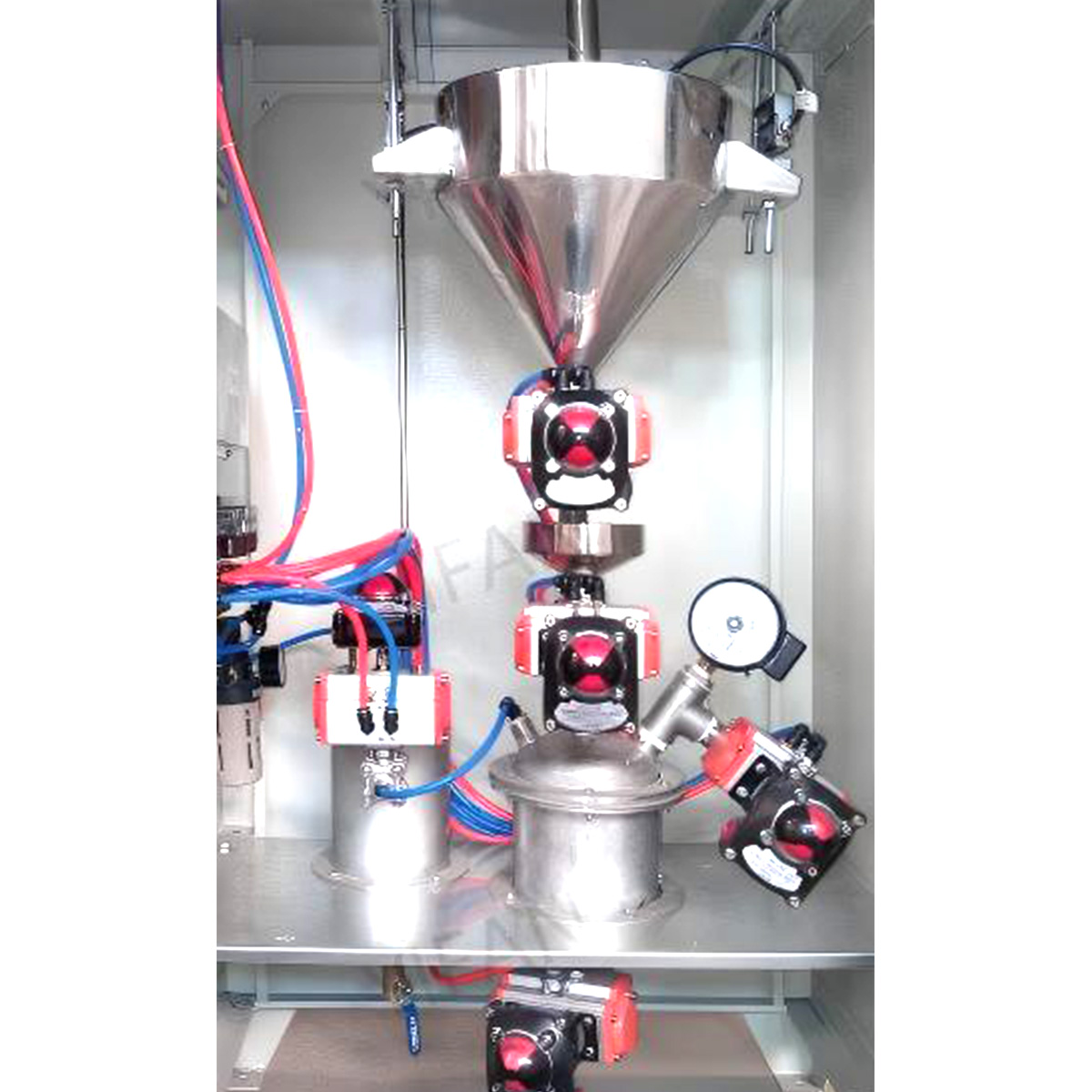
A Centralized Feeding System (CFS) can be customized to meet the specific requirements of various industries. In aquaculture, for example, low-air-pressure pumps are used to avoid breaking feed pellets, which can be delicate in aquatic environments. This is essential for feeding fish efficiently without waste or damage to the feed.
In the plastics industry, CFS designs include wear-resistant conveyors that can handle abrasive materials like PVC powder. These systems are built to withstand the harsh nature of the material and ensure smooth transport without excessive wear or breakdowns.
For PVC production, the system often incorporates negative pressure combined with spiral conveyors to handle heavy, abrasive materials. These features allow for better control over the material flow, ensuring the system runs smoothly even when dealing with more challenging substances.
Industry | Customization Example | Specialized Components |
Aquaculture | Low-air-pressure pumps for delicate feed | Low-air-pressure pumps, water-resistant silos |
Plastics | Wear-resistant conveyors for abrasive materials | Stainless steel conveyors, vacuum conveying |
PVC Production | Combination of negative pressure and spiral conveyors | Wear-resistant spiral conveyors, dust-free systems |
The properties of the materials being handled significantly influence the design of a CFS. For instance, moisture-sensitive materials require dehumidification systems to prevent material degradation. In industries like plastics, where moisture can cause defects in the final product, drying systems are critical to ensuring quality.
Materials like PVC powder, which are highly abrasive, require specialized components such as wear-resistant conveyors and pipes. The rough texture of these materials can quickly wear down standard systems, leading to maintenance issues and reduced efficiency.
In contrast, lightweight, non-abrasive materials like feed for aquaculture require gentler systems. Low-air-pressure pumps, for instance, are more suitable for these materials, reducing the risk of breakage or damage during transport.
These industry-specific variations are essential for maximizing the efficiency and longevity of a CFS, ensuring that it meets the specific challenges posed by the materials being handled.
Using low-quality components in a Centralized Feeding System (CFS) can lead to significant inefficiencies, safety issues, and costly maintenance challenges. For instance, pipes made from inferior materials may crack under vacuum pressure, leading to material leaks and increased waste. This not only disrupts the production process but also compromises system reliability.
Inaccurate metering scales, another critical component, can cause inconsistencies in material dosing. If scales fail to provide precise measurements, it can result in over- or under-feeding, affecting product quality and operational efficiency. Poor filtration systems also contribute to problems like contamination or system blockages, reducing the system's overall performance and increasing the risk of downtime.
Subpar Component | Risks and Issues | Example |
Pipes | Cracking under vacuum, material leaks, waste | Non-HDPE pipes causing leaks |
Metering Scales | Inaccurate dosing, inconsistent material flow | Scales with >±0.5% error |
Filtration Systems | Contamination, system clogs, reduced efficiency | Poor cyclone dust collectors |
To avoid these risks, it is essential to use high-quality, industrial-grade materials. For example, 316L stainless steel is highly resistant to corrosion and wear, making it ideal for conveyors and other systems exposed to harsh materials like PVC powder. This material ensures long-lasting durability and minimizes the risk of component failure.
In addition, food-grade HDPE (high-density polyethylene) is a must for systems handling food-grade materials, such as aquaculture feed. This material is resistant to moisture and chemicals, ensuring that it remains intact and safe for sensitive applications. Precision sensors, like those used for metering and monitoring material flow, are another crucial component. These sensors, when made to high standards, ensure that each stage of the feeding process is accurately controlled, leading to better quality and efficiency.
By using top-tier materials and components, manufacturers can significantly reduce the risks associated with low-quality systems. The upfront investment in quality pays off by increasing system reliability, reducing maintenance costs, and improving overall production outcomes.
A Centralized Feeding System (CFS) integrates material storage, processing, and distribution into one efficient process. It boosts operational efficiency, reduces waste, and ensures consistent material quality across industries like aquaculture, plastics, and PVC production. Choosing or designing a CFS tailored to specific needs, with insights from leading companies such as Yifan, can optimize production. Yifan's products offer advanced solutions, improving performance and reducing maintenance costs, making them valuable for industries seeking high-quality automation systems.
A: A Centralized Feeding System (CFS) is an automated solution that integrates the storage, processing, and distribution of materials across production lines. It streamlines operations, reducing waste and improving efficiency.
A: A CFS enhances efficiency by automating material handling, reducing manual labor, and ensuring consistent material delivery, which minimizes errors and downtime.
A: Industries benefit from a CFS because it optimizes production, reduces waste, ensures consistent material quality, and improves overall system reliability.
A: Key components include material storage units, preprocessing modules, conveying systems, control and monitoring units, filtration systems, and distribution units.
A: By using high-quality components and automation, a CFS reduces wear and tear, lowers labor costs, and minimizes the need for frequent repairs, thus cutting maintenance costs.


