


Views: 0 Author: Site Editor Publish Time: 2026-08-14 Origin: Site


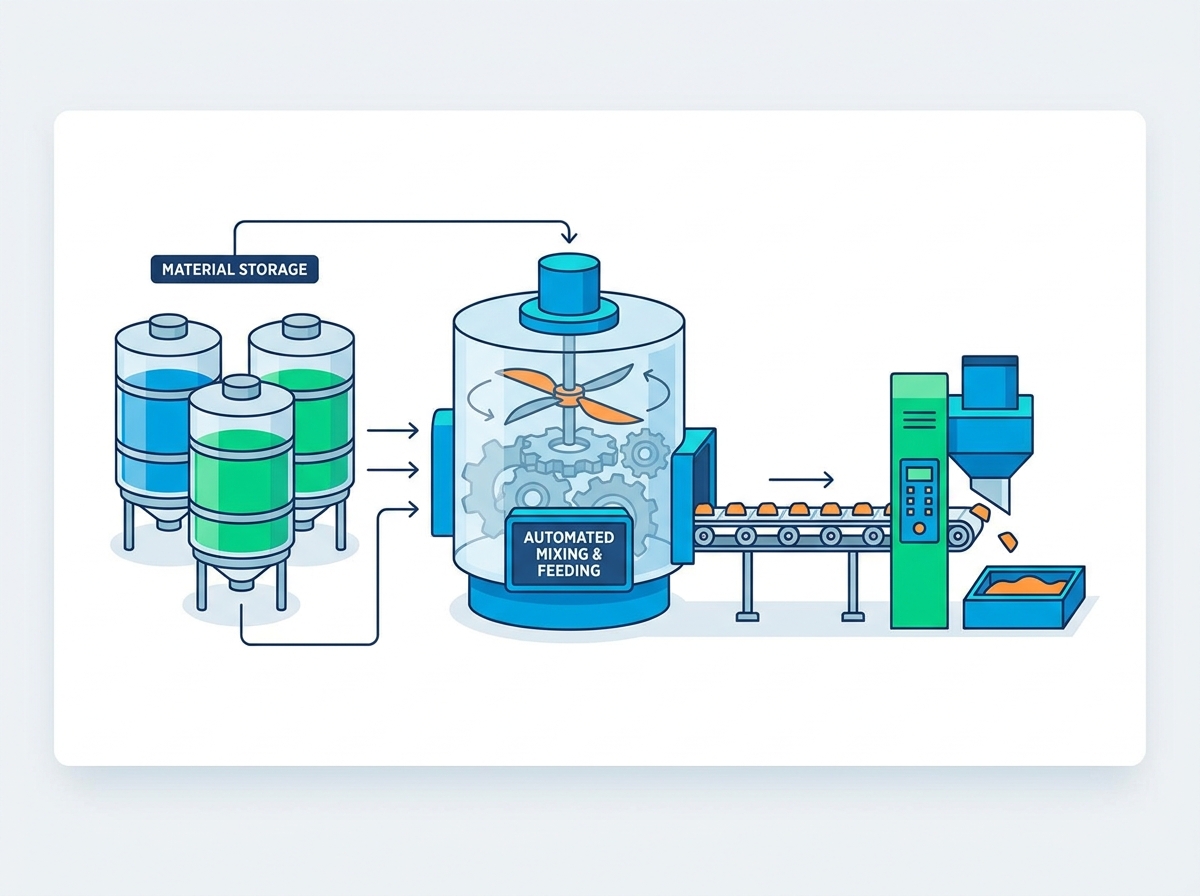
Manual material handling creates severe operational bottlenecks in modern production environments. Relying on isolated processes leads to batch inconsistency, heavy labor reliance, material waste, and critical traceability gaps. As production volumes scale, these isolated methods fail. They expose facilities to cross-contamination risks and degrade product quality across applications ranging from industrial plastics to commercial agriculture. Scaling production requires a shift away from fragmented workflows. The engineering of a fully integrated automatic mixing and feeding system provides the critical path forward. This architecture guarantees precise recipe control, continuous throughput, and verifiable operational efficiency. By synchronizing bulk storage, dosing, and blending, facilities eliminate human error and achieve strict adherence to complex material recipes. We will break down the exact engineering requirements to build a system that scales with your production demands and eliminates material handling bottlenecks.
Material Profiling is Foundational: System design must begin with exact material characteristics (bulk density, flowability, abrasiveness) and application types (e.g., dry powders, agricultural grains, liquid concentrates) to prevent bridging, ratholing, or degradation.
Precision Dictates Architecture: The choice between volumetric and gravimetric dosing, as well as the integration of highly calibrated scales for micro-ingredients, directly impacts batch accuracy and operational costs.
Integration Over Isolation: A successful automatic mixing and feeding system requires seamless communication between bulk storage, feeders, mixers, and plant-wide ERP/SCADA systems for automated recipe management.
Risk Mitigation is Built-In: Effective designs proactively address dust control, cross-contamination, and maintenance accessibility to minimize unplanned downtime.
Table of Contents
System design requires strict baseline metrics to ensure the final architecture meets production demands. You must define the required throughput in kilograms or tons per hour. Cycle times dictate the pace of the entire facility. Calculate the exact time available for filling, mixing, and discharging each batch without starving downstream equipment. If your extruder requires 2,000 kg/hr, your upstream batching system must comfortably exceed this rate to account for refill times and transition delays.
To accurately establish these baselines, follow these evaluation steps:
Calculate maximum downstream consumption rates during peak production shifts.
Measure the exact fill and discharge times of your proposed mixing vessels.
Determine the required resting or reaction time for specific chemical blends before discharge.
Factor in automated cleaning cycles or purge times when switching between incompatible recipes.
Determine optimal feeding frequencies for your specific application. Evaluate how continuous, high-frequency feeding compares to large, infrequent batching. Continuous feeding stabilizes downstream processes, such as extruder operations in plastics manufacturing. In livestock and poultry feed production, optimized feeding frequencies directly improve yield and nutrient absorption. Establish rigid tolerances for dosing accuracy and batch-to-batch consistency. Identify current waste percentages and track labor hours dedicated to manual material handling. These figures benchmark future operational improvements.
Manual material handling introduces significant operational burdens. Compare the ongoing inefficiencies of manual systems, including rework, material spillage, and heavy labor allocation, against the streamlined capabilities of automation. Identify specific operational trigger points that justify a system upgrade. Scaling beyond a certain number of daily batches often breaks manual workflows. Introducing complex multi-ingredient recipes or facing strict regulatory traceability requirements demands automated precision.
Manual errors carry hidden operational impacts. Off-spec product leads to immediate material waste and potential recalls. Inconsistent nutrient delivery in agricultural applications ruins crop or livestock yields. Regulatory compliance failures halt production entirely. Evaluate efficiency gains by calculating the increase in usable yield and the reduction in unplanned downtime. A well-designed automatic mixing and feeding system eliminates these variables, ensuring every batch meets exact specifications. When operators manually weigh and dump bags, fatigue inevitably leads to dosing errors. Automation replaces this fatigue with repeatable, high-speed precision, allowing you to reallocate labor to higher-value tasks like quality control and system maintenance.
Storage selection dictates the flow of raw materials into the system. Tower silos accommodate massive volumes of stable bulk materials, minimizing the facility footprint through vertical integration. Surge bins provide localized storage near the mixing line, buffering the feed rate to prevent bottlenecks. Bulk bag (FIBC) unloaders handle intermediate volumes and specialty ingredients delivered in super sacks.
Difficult materials require specialized discharge aids to prevent bridging and ratholing. Mechanical agitators physically break up cohesive powders. Fluidization pads inject air into the lower cone of a silo, aerating fine powders to restore flowability. Vibratory bottoms shake the material bed, forcing stubborn granules through the discharge valve. Match the discharge aid directly to the material's angle of repose and moisture content.
Moving material from storage to the mixing vessel requires precise conveyance engineering. Pneumatic conveying systems dominate powder and bulk transit. Positive pressure systems push material through the line, ideal for moving ingredients from a single source to multiple destinations. Negative pressure (vacuum) systems pull material, offering clean operation and excelling at drawing from multiple sources to a single scale hopper.
Evaluate dense phase versus dilute phase conveying. Dense phase pushes slugs of material at low velocities, protecting fragile particles from degradation and minimizing wear from abrasive materials. Dilute phase suspends particles in a high-velocity air stream, suitable for durable powders over shorter distances. Compare these pneumatic options against mechanical alternatives. Screw conveyors provide metered delivery for heavy powders. Bucket elevators handle vertical lifts for durable grains. Drag chains excel in heavy-duty agricultural or industrial applications where pneumatic systems consume excessive energy.
Material Conveyance Technology Comparison
Technology Type | Ideal Material Characteristics | Key Advantages | Primary Limitations |
|---|---|---|---|
Dilute Phase Pneumatic | Durable powders, non-abrasive granules | Continuous flow, flexible routing | High particle degradation, high wear |
Dense Phase Pneumatic | Fragile, highly abrasive, or mixed bulk | Low velocity, minimal wear/degradation | Complex controls, lower throughput |
Screw Conveyors | Heavy powders, sticky materials | Precise metering, simple maintenance | Limited routing flexibility, high friction |
Bucket Elevators | Grains, durable pellets, aggregates | Efficient vertical lifting, low power usage | Difficult to clean, cross-contamination risk |
Volumetric feeding measures material by volume over time. Use volumetric feeders for materials with highly consistent bulk density and applications with lower accuracy requirements. Gravimetric feeding, including Loss-in-Weight and Gain-in-Weight systems, measures material by mass. Deploy gravimetric feeders for high-precision applications, fluctuating material densities, and strict recipe adherence. Loss-in-weight feeders continuously weigh the hopper and adjust the discharge rate to maintain an exact mass flow, compensating for any material buildup on the screw.
Volumetric vs. Gravimetric Feeding Comparison
Feature | Volumetric Feeding | Gravimetric Feeding |
|---|---|---|
Measurement Method | Volume per unit of time (e.g., RPM of a screw) | Actual mass or weight over time |
Accuracy Level | Moderate (±2% to ±5%) | High (±0.25% to ±1%) |
Material Density Handling | Requires consistent bulk density | Automatically adjusts to density fluctuations |
System Complexity | Simple controls, lower initial investment | Complex load cells, advanced PLC integration |
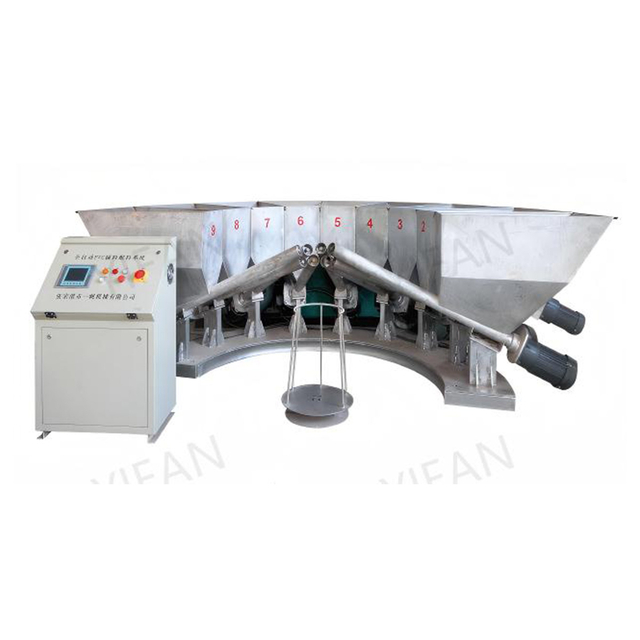
Macro and micro-ingredient handling require distinct engineering approaches. Dosing bulk materials like grains or plastic resins utilizes large-scale load cells and high-capacity valves. Micro-ingredients, such as trace minerals, vitamins, or specialized chemical additives, demand specialized batch scales. These scales utilize high-resolution load cells isolated from plant vibration to measure grams rather than kilograms. Liquid integration requires specialized manifolds and mass flow meters to deliver liquid stock concentrates and binders precisely into dry bulk flows without causing clumping.
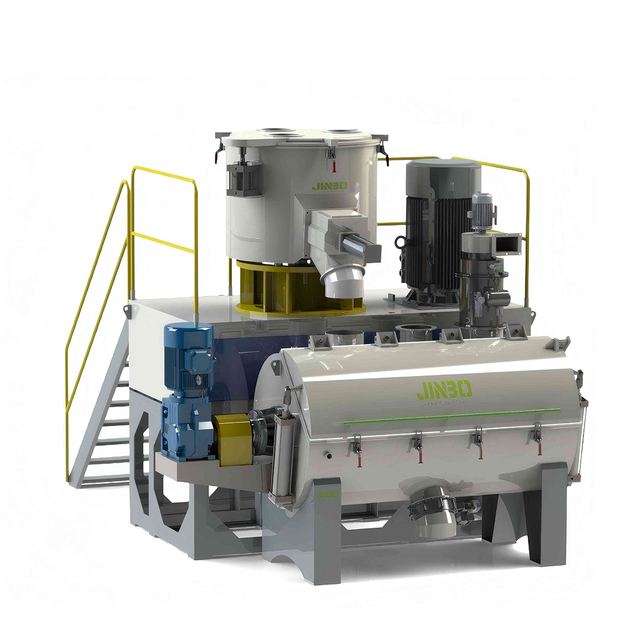
Categorize mixer types based on the physical demands of the application. Ribbon blenders fold dry powders efficiently, providing a homogenous mix for standard industrial recipes. They utilize inner and outer helical ribbons to move material in opposite directions, ensuring a thorough blend. Paddle mixers lift and fold fragile materials, making them ideal for poultry feed or delicate granules that shatter under high shear. High-shear mixers aggressively break down agglomerates, excelling in liquid-solid dispersions and highly cohesive chemical blends where standard agitation fails to achieve homogeneity.
Evaluate the required Coefficient of Variation (CV) for your product. A lower CV indicates a more uniform mix, which is critical for pharmaceutical or high-performance agricultural feeds. Achieving a target CV dictates the required residence time inside the mixer.
Choose between continuous and batch mixing approaches. Continuous mixing requires uninterrupted, highly accurate feeding from upstream gravimetric feeders, producing a steady stream of blended product. This approach minimizes the physical footprint of the equipment. Batch mixing isolates specific quantities, offering easier traceability and flexibility for facilities running multiple distinct recipes per shift. The chosen mixing technology directly dictates the required upstream feeding rates and automation logic.
System design fails without exact material data. Test every ingredient for bulk density, particle size distribution, moisture sensitivity, and angle of repose. Bulk density dictates hopper sizing and feeder capacities. Particle size distribution reveals segregation risks during transit. Moisture sensitivity determines if the system requires dehumidified air for pneumatic conveying. The angle of repose dictates the slope of hopper cones to ensure mass flow.
Execute a standard material testing protocol before finalizing any equipment specifications:
Measure aerated and settled bulk densities to size hoppers accurately.
Conduct shear testing to determine the material's flow function and identify bridging risks.
Analyze moisture content variations across different seasonal delivery batches.
Test for abrasiveness using standardized wear indices to select appropriate piping materials.
Address industry-specific material challenges directly. Abrasive PVC powders in plastics manufacturing require wear-resistant piping and heavy-duty rotary valves. Variable-moisture grains in livestock feed demand robust mechanical conveyors that resist jamming. Highly concentrated liquid nutrients in greenhouse and hydroponic systems require corrosion-resistant dosing pumps and leak-proof manifolds. Abrasive, cohesive, or hygroscopic materials dictate the selection of contact surfaces. Specify 304 or 316 stainless steel, electropolished finishes, or specialized Teflon coatings based on the exact chemical and physical profile of the ingredients.
Conduct a rigorous spatial analysis of the facility. Minimize conveyance distances and vertical lifts to reduce energy consumption and equipment wear. Map the process flow from receiving to packaging. Identify potential bottlenecks where material flow changes direction or elevation. Ensure sufficient overhead clearance for bulk bag unloaders and maintenance access for scale calibration.
Implement modular design principles. A static system becomes obsolete as production scales. Design the layout to accommodate future capacity expansions. Leave physical space and control panel capacity for new ingredient lines, additional micro-ingredient feeders, or extra storage silos. Modular frameworks allow you to bolt on new capabilities without ripping out the existing core infrastructure.
The intelligence of an automatic mixing and feeding system resides in its controls. Evaluate the requirements for Programmable Logic Controllers (PLCs) and Human-Machine Interfaces (HMIs). The PLC must process high-speed signals from load cells and adjust feeder speeds in milliseconds to hit exact target weights. The HMI must provide operators with intuitive visualization of the entire process, including active alarms, batch progress, and silo levels.
Integrate the mixing and feeding controls with plant-wide SCADA or ERP systems. This integration enables automated recipe downloads directly from the production schedule, eliminating manual data entry errors. It facilitates strict lot tracking, recording the exact weight and lot number of every ingredient in every batch. Real-time data logging provides the foundation for continuous process optimization and quality audits.
Material separation during transit ruins batch homogeneity. This risk peaks during pneumatic conveying or long free-falls into storage bins, particularly in blends containing vastly different particle sizes. Heavy minerals separate from light grains, destroying the nutritional profile of agricultural feed. Mitigate this by minimizing free-fall distances, utilizing mass-flow hopper designs, and employing dense phase conveying to keep blended particles locked together.
Cross-contamination destroys product integrity. Facilities handling multiple recipes, allergens, or reactive chemicals require strict cleaning protocols. Evaluate clean-in-place (CIP) or dry-cleaning design features. Specify tool-less dismantling for feeders, allowing operators to remove screws and tubes quickly. Demand polished welds and eliminate dead zones where material accumulates. Dedicated lines for highly sensitive ingredients often provide the most secure defense against cross-contamination.
Airborne dust threatens worker health and destroys rotating equipment. Integrate active dust collection systems at all transition points, including silo filling, feeder discharges, and mixer inlets. Maintain a slight negative pressure on the mixing vessel to prevent dust from escaping during the loading phase. Properly sized dust collectors capture fugitive particles and can often return them to the process stream, reducing overall material waste.
Strict regulatory compliance is non-negotiable. Explosive dust environments require adherence to ATEX or NFPA standards. This involves installing explosion vents, isolation valves, and grounding all equipment to prevent static discharge. Food, pharmaceutical, and agricultural applications often require adherence to FDA or hygienic design standards, mandating specific surface finishes, FDA-approved elastomers, and strict traceability protocols. Failure to engineer these safety measures into the initial design results in costly retrofits and severe liability risks.
Engineering a system requires balancing immediate needs with future adaptability. Analyze the trade-off between deploying a highly customized, application-specific system versus a modular, standardized platform. Customized systems solve unique immediate problems but often resist future modifications.
Avoid over-engineering. Adding unnecessary precision to bulk ingredients inflates system complexity and maintenance requirements without improving final product quality. Conversely, under-engineering leads to chronic bottlenecks, frequent manual interventions, and degraded batch consistency. Select components that meet your strictest current tolerances while utilizing standard communication protocols and modular physical footprints to ensure long-term operational flexibility.
Audit your current manual handling processes to identify exact bottlenecks, waste percentages, and labor drains.
Conduct comprehensive material profiling for all bulk and micro-ingredients to dictate storage and conveyance technologies.
Define rigid throughput and accuracy metrics before selecting volumetric or gravimetric feeding mechanisms.
Partner with engineers to map a modular facility footprint that minimizes conveyance distances and allows for future expansion.
Integrate the new system directly into your existing ERP/SCADA architecture to ensure automated recipe management and strict lot traceability.
For manufacturers evaluating material handling automation, Zhangjiagang Yifan Machinery Co., Ltd. brings 20 years of industry experience in automatic mixing and feeding systems, intelligent material conveying equipment, pneumatic conveying systems, and weighing and metering solutions. By integrating R&D, manufacturing, sales, and service, the company supports customers in developing more reliable and efficient material handling solutions tailored to different production and process requirements.
A: Volumetric feeding dispenses material by volume over a specific time, relying on consistent material density for accuracy. Gravimetric feeding measures material by weight using load cells, continuously adjusting the feed rate to maintain exact mass flow. Gravimetric systems provide much higher precision for varying bulk densities.
A: Prevent bridging by matching the silo cone angle to the material's angle of repose. For cohesive materials, install discharge aids such as mechanical agitators, vibratory bin dischargers, or fluidization pads to maintain continuous material flow into the feeder.
A: Use dense phase conveying for fragile, highly abrasive, or heavily blended materials. It moves material in slow, heavy slugs rather than suspending it in high-velocity air. This minimizes particle degradation, reduces equipment wear, and prevents blended materials from segregating during transit.
A: Micro-ingredients require extreme precision, often measured in grams. Bulk feeders lack the resolution to dose these tiny amounts accurately. Specialized micro-ingredient scales use high-resolution load cells and smaller dosing mechanisms to ensure critical additives are not over-dosed or under-dosed.
A: Automated systems integrate with plant PLCs and ERP software to record the exact weight, lot number, and time of every ingredient added to a batch. This eliminates manual logging errors and provides a permanent, searchable digital record for quality control and compliance audits.
A: Under-engineering leads to frequent material jams, inaccurate dosing, and severe production bottlenecks. It forces operators to intervene manually, which reintroduces human error, increases safety risks, and negates the throughput advantages of automation.


