


Views: 0 Author: Site Editor Publish Time: 2026-08-14 Origin: Site


Bulk powder processing carries high operational and regulatory stakes. Facilities handling dry bulk solids face constant battles against material loss, batch contamination, and the severe safety risks associated with combustible dust incidents. When powders escape the process stream, the financial impact extends far beyond wasted material. Fugitive emissions trigger regulatory scrutiny, force unplanned maintenance shutdowns, and create hazardous environments that threaten facility survival.
Legacy or poorly integrated equipment often serves as the root cause of these process bottlenecks. Manual dumping stations, open transfer points, and mismatched conveying lines generate fugitive dust emissions and introduce severe ergonomic hazards. These outdated configurations disrupt material flow and degrade product quality. Solving these challenges requires a holistic engineering approach to designing a powder handling system. Plant engineers must align specific material characteristics with the correct storage, conveying, and containment technologies. By replacing fragmented equipment with a unified, enclosed process, facilities eliminate manual handling risks and control dust at the source.
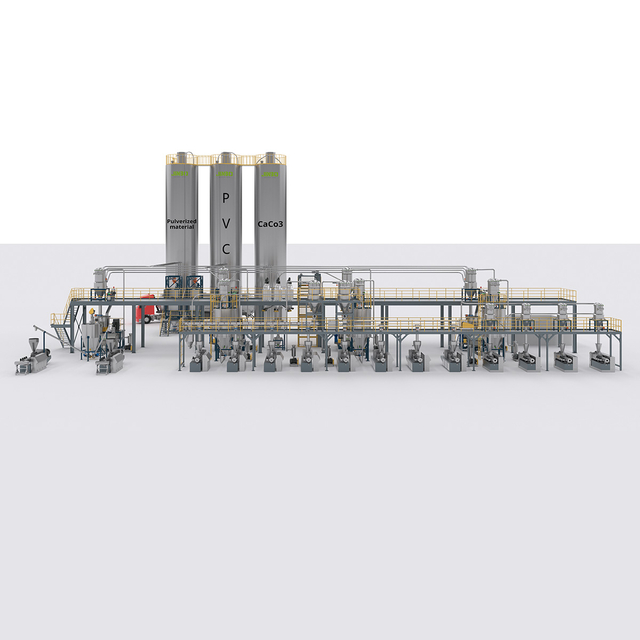
Material-First Engineering: System design must begin with precise material characterization (flowability, bulk density, combustibility) before selecting storage or conveying infrastructure.
Conveying as Containment: Enclosed transport methods, particularly vacuum and pneumatic conveying systems, are critical for eliminating manual dumping risks and controlling fugitive dust at the source.
Multi-Layered Dust Mitigation: Effective dust control requires integrating source containment, appropriately sized filtration (air-to-cloth ratios), and active explosion protection strategies.
Table of Contents
Engineering a reliable process begins with rigorous material testing. You cannot select equipment based on generic material names. Testing must establish the exact bulk density, particle size distribution, moisture content, and angle of repose for the specific powder being handled. These metrics dictate hopper angles, conveying line diameters, and filtration requirements. Shear cell testing provides empirical data on how the material behaves under pressure. We use this data to design storage vessels that promote consistent discharge rather than packing into a solid block.
Fine powders behave very differently than granules, pellets, or blended dry bulk solids. Fine particulates often fluidize easily but can also pack tightly and resist flow when deaerated. Think of titanium dioxide; it bridges easily and requires aggressive flow promotion. Granules and pellets generally flow better but are highly susceptible to mechanical degradation and attrition during transport. Blended solids introduce the risk of segregation. Particles separate by size or density during free-fall or vibration, destroying batch uniformity before the product even reaches the packaging line.
Material characteristics directly dictate equipment selection and velocity limits. Cohesive powders require active discharge aids and specific hopper geometries to prevent blockages. Abrasive materials, such as alumina or silica, demand low-velocity conveying and wear-resistant components like ceramic-lined elbows to prevent rapid equipment degradation. Fragile materials require gentle handling methods to maintain particle integrity and prevent the generation of excess fines.
Accurate transfer rate calculations form the backbone of system sizing. Engineers calculate the required throughput in kilograms per hour while accounting for both vertical lifts and horizontal routing distances. Pneumatic conveying lines must maintain specific pick-up and saltation velocities to keep material suspended. Longer distances and higher vertical lifts increase the pressure drop across the system, requiring larger blowers or vacuum pumps to sustain the necessary material transfer rates.
To properly size a pneumatic transfer line, engineers typically follow these steps:
Determine the required mass flow rate based on downstream batching or continuous feed requirements.
Map the exact physical routing, counting every vertical lift, horizontal run, and 90-degree elbow.
Calculate the equivalent pipe length, factoring in the severe pressure drops caused by elbows and directional changes.
Select the appropriate conveying phase (dilute or dense) based on material fragility and abrasiveness.
Calculate the required air volume and pressure differential to maintain the minimum saltation velocity.
Facilities must also evaluate continuous versus batch processing requirements. Continuous processes demand steady, uninterrupted material feed, often utilizing loss-in-weight feeders for high accuracy. Batch processing requires rapid, high-volume transfers to fill mixers or reactors within tight cycle times. Automated controls and Programmable Logic Controllers (PLCs) monitor line pressures, valve positions, and fill levels, sequencing the equipment to prevent system-wide bottlenecks and material plugs.
Physical facility constraints frequently dictate system architecture. Headroom limitations often complicate the installation of gravity-fed equipment, forcing the use of low-profile bulk bag dischargers or mechanical elevators. Existing process integration requires navigating complex piping networks and structural supports. The system footprint must accommodate maintenance access, filter changes, and operator ergonomics without disrupting adjacent production lines.
Evaluating system design requires a strict focus on industry-standard compliance. OSHA regulations mandate the control of airborne particulates to protect worker respiratory health. For combustible materials, NFPA 652 and 654 provide the framework for conducting a Dust Hazard Analysis (DHA) and implementing required explosion protection strategies. Facilities operating in Europe must adhere to ATEX directives for equipment used in explosive atmospheres.
In sanitary applications, FDA and cGMP guidelines dictate equipment construction. Systems handling food or pharmaceuticals must utilize 316L stainless steel, sanitary welds polished to a specific Ra finish (typically 0.8 micrometers or better), and crevice-free designs to prevent bacterial growth and cross-contamination. Regulatory compliance dictates every engineering decision in the handling process, from the type of gasket material used to the specific radius of a pipe bend.
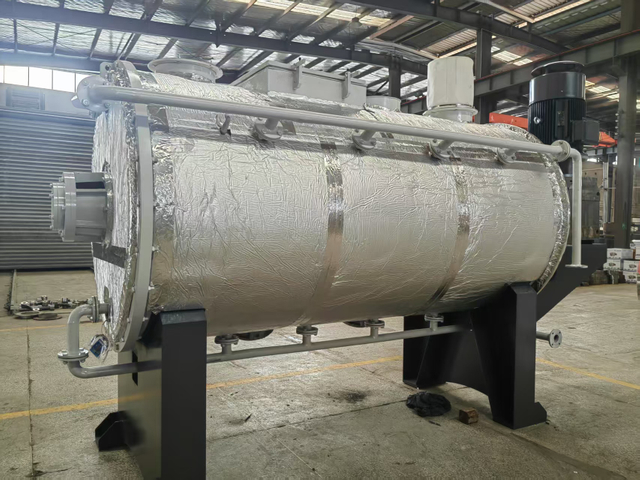
Selecting the correct storage vessel depends heavily on volume requirements and material delivery methods. High-volume operations receiving material via truck or railcar rely on outdoor silos. These large vessels require careful structural engineering to handle wind loads, seismic activity, and the internal pressures exerted by tons of bulk solids. Smaller batch operations typically utilize Flexible Intermediate Bulk Containers (FIBCs) or rigid intermediate bulk containers (IBCs). FIBC dischargers must feature secure bag clamping and tensioning mechanisms to ensure complete emptying without dust escape.
Storage vessels must prevent material degradation over time. Moisture-sensitive powders require dry air blanketing within the silo to prevent caking and agglomeration. Thermal insulation prevents condensation on interior vessel walls during temperature fluctuations. The structural design must also account for the material's consolidation properties, ensuring the vessel walls are steep enough and smooth enough to promote mass flow rather than funnel flow.
Storage Vessel Comparison
Vessel Type | Typical Volume | Best Application | Primary Engineering Challenge |
|---|---|---|---|
Welded Silo | 1,000 - 10,000+ cubic feet | High-volume truck/railcar delivery | Managing immense internal consolidation pressure |
Rigid IBC | 30 - 100 cubic feet | In-plant batch transfer and blending | Ensuring reliable docking and dust-free discharge |
FIBC (Bulk Bag) | 1,000 - 4,000 lbs capacity | Receiving raw materials from suppliers | Operator ergonomics and bag tensioning during empty |
Material flow issues in storage vessels typically manifest as bridging, rat-holing, or segregation. Bridging occurs when particles interlock over the discharge outlet, completely halting flow. Rat-holing happens when a central channel of material discharges, leaving stagnant material packed against the vessel walls. Segregation destroys product consistency as particles separate based on physical properties during discharge.
To combat these issues, engineers apply specific flow promotion devices. Mechanical agitators physically break up bridges and keep cohesive materials moving. Fluidization pads inject low-pressure air into the bottom of the cone, reducing inter-particle friction and allowing fine powders to flow like liquids. Pneumatic vibrators apply targeted mechanical energy to the hopper walls, dislodging stubborn materials. The selection of these aids must match the material. Applying vibration to a highly compressible powder will often pack it tighter, worsening the blockage.
Designing storage infrastructure involves balancing capacity against material behavior. Maximizing storage capacity reduces the frequency of material deliveries and lowers logistical overhead. However, storing large volumes of powder for extended periods significantly increases the risk of material compaction. The weight of the material in a tall silo exerts immense pressure on the powder at the bottom, often causing it to form solid blocks that refuse to discharge.
Engineers calculate the critical consolidation stress of the powder to determine the maximum safe storage height. If a material is highly prone to compaction or segregation, we often utilize multiple smaller hoppers rather than one massive silo. This approach maintains material flowability and ensures consistent batch quality, even if it requires a slightly larger overall facility footprint.
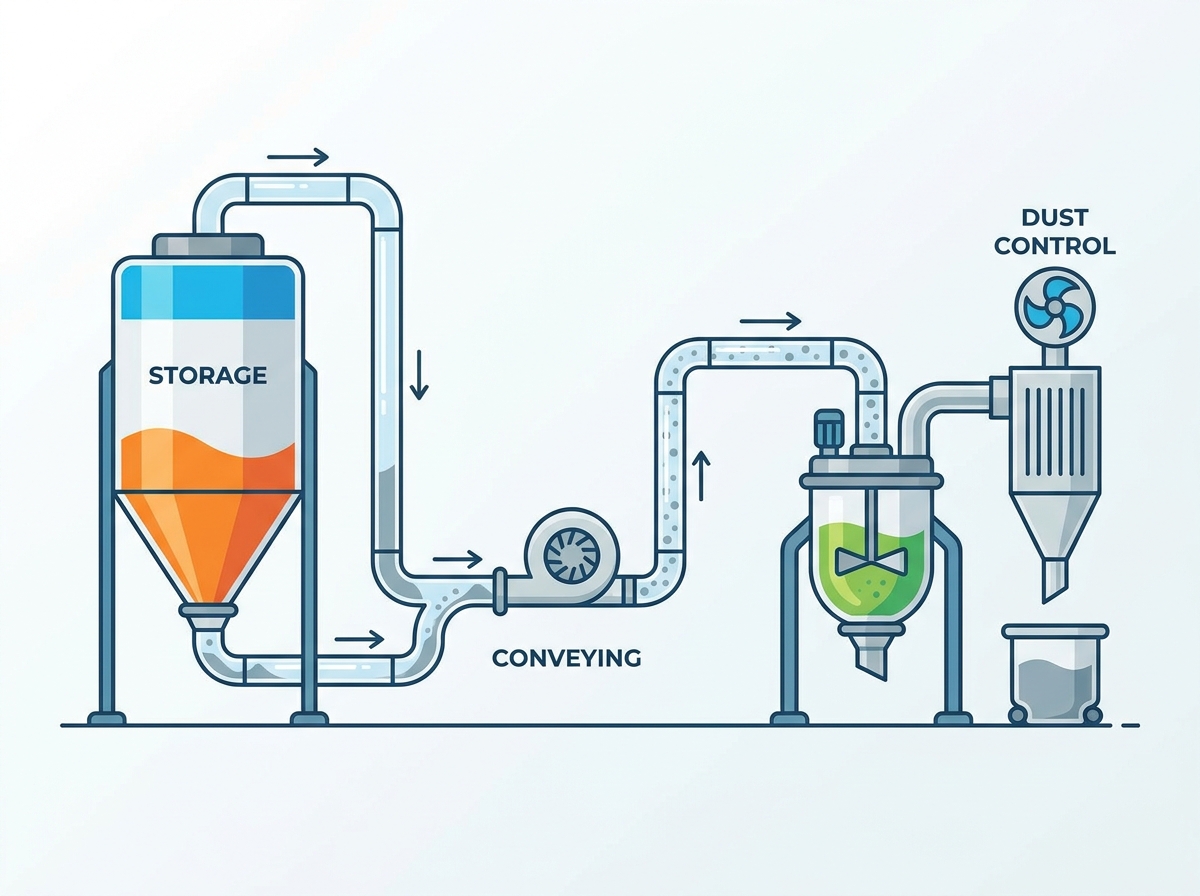
Vacuum conveying operates by generating negative pressure within the transport line, pulling material from the source to the destination. The primary mechanical advantage of this method is inherent containment. Because the entire line operates under negative pressure, any pinhole leak or loose connection will draw ambient air into the system rather than blowing dust out into the facility. This makes vacuum conveying highly reliable for maintaining clean plant environments.
This technology is the ideal choice for handling toxic powders and controlling combustible dust. By utilizing vacuum wands or integrated bag dump stations, operators eliminate manual scooping and dumping. The powder is drawn directly into the enclosed process, drastically reducing operator exposure and preventing fugitive dust from settling on overhead rafters where it poses a secondary explosion hazard. A standard vacuum system includes a pick-up point, the conveying tubing, a vacuum receiver to separate the powder from the air stream, a secondary filter, and the vacuum exhauster.
Positive pressure systems use blowers or compressors to push material through the conveying line. Dilute phase positive pressure conveying utilizes high-velocity, low-pressure air to keep particles suspended in the airstream. This approach is highly effective for moving non-fragile, non-abrasive materials over long distances and to multiple destination points. It is a workhorse technology for high-volume bulk transfer.
Dense phase conveying takes the opposite approach, utilizing low-velocity, high-pressure air to push slugs of material through the line. Because the material moves slowly, dense phase is the superior choice for fragile materials that would shatter at high speeds, highly abrasive powders that would destroy pipe elbows, or blended powders that might segregate in a dilute phase system. Both pressure methods provide a completely sealed system, protecting the product from environmental contamination and protecting the environment from the product.
While pneumatic systems excel in containment, mechanical conveyors remain vital for specific applications. Screw conveyors provide precise volumetric feeding over short distances and handle highly cohesive or wet materials that would plug an air-driven line. Aero-mechanical conveyors use a wire rope and disc assembly running at high speeds to create an air pocket that moves material rapidly with minimal degradation.
Bucket elevators are the standard for vertical lifts of heavy, abrasive aggregates where pneumatic conveying would consume excessive energy. Mechanical conveying often offers better overall energy efficiency than pneumatic systems, as they do not require large air compressors or blowers. However, mechanical systems typically require more maintenance due to moving parts and are generally harder to seal completely against dust emissions.
Conveying Technology Comparison
Conveying Method | Primary Advantage | Ideal Material Types | Limitations |
|---|---|---|---|
Vacuum Pneumatic | Inherent dust containment (negative pressure) | Toxic, combustible, fine powders | Limited by distance and throughput capacity |
Dilute Phase Pressure | High volume over long distances | Non-abrasive, non-fragile bulk solids | High velocity causes particle degradation |
Dense Phase Pressure | Gentle handling, low wear | Fragile, abrasive, blended materials | Requires high-pressure plant air, higher capital cost |
Screw Conveyor | Handles cohesive/wet materials well | Sludges, heavy powders, short distances | Difficult to clean thoroughly, limited routing flexibility |
Effective dust control requires eliminating emissions at every transition point. Closed-loop processing ensures that material never contacts the ambient environment once it enters the system. Bag dump stations must feature integrated dust collection systems that pull a continuous downdraft away from the operator's breathing zone. When the operator opens a bag, the airborne particles are immediately drawn into the filtration media rather than escaping into the room.
Engineering controls must prevent particles from becoming airborne in the first place. This involves minimizing drop heights during gravity transfers and optimizing transfer velocities in conveying lines. When material drops into a hopper, it displaces an equal volume of air. This displaced air will carry fine dust particles with it unless controlled. Systems must be designed to vent this displaced air through dedicated filtration units, allowing the dust to settle out of suspension and return to the process stream.
Handling highly potent Active Pharmaceutical Ingredients (APIs) or toxic chemicals requires specialized containment strategies to meet strict Occupational Exposure Limits (OELs). Standard dust collection is insufficient. Facilities implement split butterfly valves (SBVs) for docking and transferring materials. These valves allow two separate vessels to connect, transfer powder, and disconnect without exposing the interior surfaces to the ambient environment.
For the highest hazard levels, glovebox isolators provide a physical barrier between the operator and the powder. Operators manipulate the material using heavy-duty gloves sealed into a negative-pressure enclosure. Continuous liner systems allow for the safe offloading of toxic waste or product into sealed bags. Designing for OEL compliance requires meticulous attention to every seal, gasket, and transfer point to ensure exposure levels remain below microgram-per-cubic-meter thresholds.
Managing explosive powders requires active mitigation strategies mandated by safety codes. If a dust cloud ignites within a closed vessel, the resulting pressure wave can destroy equipment and cause catastrophic secondary explosions. Explosion venting is a primary defense, utilizing engineered panels that rupture at a specific pressure to direct the explosion safely outside the facility.
To properly manage combustible dust risks, facilities execute a formal Dust Hazard Analysis (DHA) following these steps:
Identify all materials handled and test them for explosibility parameters (Kst and Pmax values).
Map the entire process flow to identify locations where combustible dust clouds can form under normal or abnormal conditions.
Identify all potential ignition sources, including static electricity, hot surfaces, and mechanical friction.
Implement engineering controls, such as explosion venting or chemical suppression, to mitigate the identified risks.
Establish administrative controls, including housekeeping schedules and operator training, to prevent dust accumulation.
In areas where venting is impossible, chemical suppression systems detect the incipient spark or pressure rise and deploy a suppressant in milliseconds to extinguish the fireball before it grows. Rotary valve isolation prevents the explosion from propagating through the conveying lines to other connected equipment. Strict grounding and bonding protocols are mandatory to eliminate static discharge. Pneumatic conveying generates significant static electricity; without proper grounding, a static spark can easily ignite a combustible dust cloud.
A dust collection system is only as effective as its filtration sizing. Engineers calculate the optimal air-to-cloth ratio, which represents the volume of air passing through a square foot of filter media. A ratio that is too high will drive dust deep into the filter, causing rapid blinding and loss of suction. Proper sizing depends entirely on the powder's dust loading characteristics and particle size.
Filter media selection is equally critical. Standard polyester filters may suffice for general nuisance dust, but fine or sticky powders require specialized materials. PTFE-coated (Teflon) filters provide a slick surface that prevents cohesive powders from sticking, allowing the reverse-pulse cleaning system to knock the dust cake loose effectively. Spunbond media offers superior durability and efficiency for fine particulates, ensuring that the exhaust air meets environmental discharge limits.
In multi-product facilities, the risk of batch-to-batch contamination is a primary engineering concern. Residue left in a hopper or conveying line from a previous run can ruin an entire subsequent batch, leading to massive product loss and potential safety recalls. Equipment must be designed for rapid and absolute cleanability to minimize downtime during product changeovers.
System integrators mitigate this risk through specific design choices. Tool-less dismantling allows operators to quickly break down rotary valves and conveying lines for inspection. Sanitary welds eliminate the microscopic crevices where powder can hide. For highly automated or hazardous processes, automated Wash-in-Place (WIP) or Clean-in-Place (CIP) capabilities are integrated. These systems utilize strategically placed spray balls to flush the entire system with water and cleaning solvents, followed by heated air drying, without requiring equipment disassembly.
Manual powder handling takes a severe physical toll on operators. Repeatedly lifting heavy bulk bags, twisting to dump 50-pound sacks, and manually scooping dense materials lead to high rates of repetitive strain injuries and musculoskeletal disorders. Automating these processes with bulk bag unloaders and vacuum transfer wands directly removes the physical burden from the workforce.
Beyond physical strain, automation drastically reduces respiratory exposure. Even non-toxic nuisance dust can cause severe respiratory issues over years of exposure. By enclosing the process and removing the operator from the immediate transfer zone, facilities protect their workforce, reduce liability, and create a significantly safer, cleaner working environment.
Theoretical calculations are necessary, but they cannot replace empirical data. Relying solely on textbook formulas for custom powder blends is a massive implementation risk. Unforeseen material behaviors, such as unexpected moisture absorption or severe attrition, can render a newly installed system useless.
Facilities must demand full-scale material testing at a vendor’s facility before approving capital expenditure. Running the actual production material through a test loop verifies the pick-up velocities, confirms the filter media selection, and proves the discharge reliability. This proof of concept ensures that the engineered solution will perform exactly as required once installed on the plant floor.
Audit your current material flow to identify exact bottleneck locations and dust emission sources.
Compile a comprehensive review of your material safety data sheets (MSDS) to verify combustible dust and toxicity hazards.
Schedule a full-scale material test with a qualified systems integrator to prove the conceptual design before finalizing equipment specifications.
Evaluate existing storage vessels for mass flow capabilities and retrofit discharge aids where rat-holing occurs.
With 20 years of industry experience, Zhangjiagang Yifan Machinery Co., Ltd. integrates R&D, manufacturing, sales, and service, focusing on automatic mixing and feeding systems and intelligent material conveying equipment. Its product portfolio includes pneumatic conveying systems, weighing and metering equipment, and related material handling solutions, supporting customers in more than 60 countries with stable and reliable processing equipment.
A: The primary components include storage vessels (silos, hoppers, bulk bag unloaders), conveying mechanisms (pneumatic lines, vacuum pumps, mechanical augers), feeding and metering devices (rotary valves, loss-in-weight feeders), and dust collection units to maintain environmental containment.
A: Vacuum systems operate under negative pressure. If a leak occurs in the piping or connections, ambient air is drawn into the system rather than combustible dust being blown out into the facility. This inherent containment prevents the formation of hazardous dust clouds.
A: Dilute phase uses high-velocity, low-pressure air to keep particles suspended in the airstream, ideal for durable powders over long distances. Dense phase uses low-velocity, high-pressure air to push slugs of material slowly, protecting fragile, abrasive, or easily segregated materials.
A: Prevention requires designing the hopper with the correct wall angles based on the material's angle of repose. Engineers also integrate flow promotion aids such as mechanical agitators, fluidization pads, or pneumatic vibrators to keep cohesive materials moving toward the discharge outlet.
A: The National Fire Protection Association (NFPA) requires facilities to conduct a Dust Hazard Analysis (DHA). Systems handling combustible dust must implement explosion protection strategies, including explosion venting, chemical suppression, rotary valve isolation, and strict grounding and bonding protocols.
A: Occupational Exposure Limit (OEL) compliance is achieved through high-containment engineering. This includes utilizing split butterfly valves for dust-free transfers, negative-pressure glovebox isolators for manual manipulation, continuous liner systems for offloading, and dedicated HEPA filtration to capture toxic particulates.


